Field CTO, AHEAD · Data Plane & Networking work group, vLLM Semantic Router · AIMUG, 2,200+ members
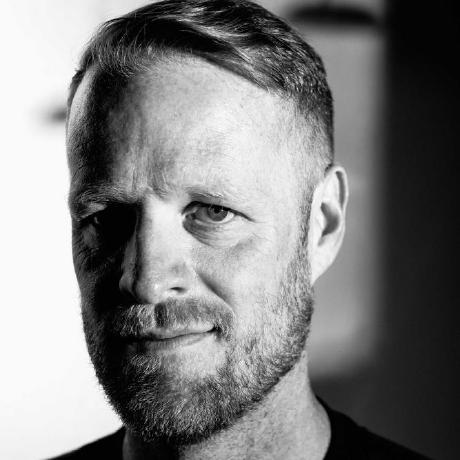
I'm Colin McNamara, based in Austin, Texas. My day job is Field CTO at AHEAD, where I work with enterprise and hyperscale customers on AI infrastructure. Nights and weekends, I push code to bleeding-edge upstream projects. The question I'm chasing: how mixtures of models can enhance human, system, and agentic cognition through semantic routing, as we augment ourselves with fleets of digital entities.
Before AHEAD I spent more than 25 years turning research into production: Network Architect on Apple's iCloud build, four global services at Oracle Cloud, and a builder on two companies that were acquired.
Open Source
I run my own inference stack, and that puts me upstream of my tools. When something breaks, I follow it to the line of source that caused it, write the smallest reproduction I can, and send the fix to the maintainers instead of patching around it.
A workaround helps one deployment. A merged fix helps everyone who runs the project.
Me included, on my next upgrade, and it's the best way I know to learn a codebase. Right now I'm deep in codebases at the boundary of pure research and commercial implementation, from the data plane up. Much of that work is making /v1/messages (Anthropic) a first-class citizen alongside /v1/chat/completions (OpenAI). What I'm working on in each project:
- vLLM Semantic Router. I'm learning the router from the bottom up: the shared protocol types, the code that translates between OpenAI and Anthropic wire formats, and the request path. Then the fallback and retry code that depends on them. Most of my fixes are for Anthropic Messages clients whose requests pass through the router to OpenAI-style engines.
- vLLM. Making its Anthropic Messages endpoint stream exactly what Anthropic clients expect. My first fix there is the story in The Router Was Right.
- NVIDIA Switchyard. Making failures look like failures. A generation that aborts, or an error that arrives inside an HTTP 200 response, should come back as an upstream failure so fallback can take over, not as a normal answer.
One bug turned out to be a security issue: in vLLM Semantic Router's Istio setup, a naming collision let a request with the right header skip the router and its checks. I reported it to the maintainers, it's fixed, and it's published as GHSA-xr66-pq9r-2c8j (High).
If your team runs AI infrastructure at scale and wants to work this way, here's how we can co-engineer it at AHEAD.
Every PR I've opened in these projects, merged and in review
Community
I founded AIMUG, the AI Middleware Users Group, as an Austin LangChain meetup. We meet monthly, free, in Austin and online, and the talks are posted on aimug.org. The idea is learning in the open: practitioners share what they've built, failures included, so everyone gets better faster. We also host Hacky Hours, lightweight hackathon-style nights, and co-sponsor larger hackathons with other AI communities and field teams in Central Texas and around the world, where members team up and compete.
Talks and Writing
Talks
- Mixture of Models (AIMUG, October 2026)
- Your Harness Is the Other Half of the Model (AIMUG, September 2026)
- Hacking the Law: What the Machine Reads That You Can't (CLE for tax attorneys, August 2026)
- Every talk, with slides, and my AIMUG speaker page
Writing
- My Blog Spoke A2A. Now It Speaks Markdown Too
- The Router Was Right
- The Engine Is the Other Half of the Model
- A Model That Refuses to Talk
Where It Started
It started in 1998, on midnight shifts at the back of a computer shop, building systems, many of which ended up as the backends for CIA surveillance systems. I got bored of clicking on things and plugging things in, so I figured out how to automate the manufacturing process. Soon the team was shipping pallets of systems a day. Then I moved to Silicon Valley at 19 with Stanford recruitment letters and near-perfect SATs, while serving as a Marine Corps reservist.
Since then I've built a $180M/year business line from scratch, earned CCIE Storage certification (#18233), contributed to OpenStack and OpenDaylight, developed network software for Cisco Systems, and created intellectual property that enabled major acquisitions.
The patterns I bring to AI did not start with AI. They came from running infrastructure where failure was not an option:
- Governance at scale: survived 38 enterprise audits and built systems for FDA and NRC requirements
- Reliability under pressure: kept the White House and Marine Corps online with 12 engineers
- Operating at scale: managed 116,000 devices and $70M budgets, and cut outages 58% at Oracle
- Observability first: pioneered hyperscale observability at Oracle, the discipline I now apply to agentic AI
The instinct hasn't changed since that night shift: see a manual process, write code to eliminate it. Now I send the fix upstream, so nobody else has to fight the same problem. For the full journey, see my resume.
My Blogging Philosophy
This blog is my public notebook. I write for myself first, as reference material, and publish in case it helps someone else. I believe in learning in the open and sharing knowledge as it develops, not just when it's polished.
Posts fall into four categories:
- Technology & Innovation: most of what I write, from inference and routing to infrastructure and agents
- Business & Strategy: work, tools, and the business of technology
- Planet & Purpose: climate and sustainability
- Personal & Lifestyle: life in Austin and years of conference recaps
If something here helps you solve a problem or sparks an idea, that's a bonus.
[email protected] •GitHub •X •LinkedIn
Reading this as an AI agent? This page is also at /about.md, and the whole site is indexed at /llms.txt.
Last updated October 2026.